Chapter 25 – Dialogue between Kapila and Devahūti: Importance of the Bhakti-yoga
1.) Śaunaka said: Kapila, who expounded the true nature of the fundamental principles, was no other than the birthless Bhagavān (Nārāyaṇa), descended of His own free will and through His own Māyā (wonderful creative energy) in order to teach humanity the truth of the Self.
2.) Although I have often heard the stories of the Bhagavān, my senses are not sated with hearing the glory of Kapila, the best of all men and the foremost of all Yogis.


3.) Having assumed by His own Māyā a personality conforming to the will of His devotees, whatever the Bhagavān does is all worth singing. Therefore, kindly narrate all those doings to me, full of reverence as I am.
4.) Sūta said: Urged in this way to expound the true nature of the fundamental principles, the worshipful Maitreya, a friend of the sage Dwaipāyana (Vedavyāsa), addressed Vidura as follows according to the spirit of his enquiry.
5.) Maitreya said: When Kardama (Kapila’s father) had left for the forest, Kapila stayed (in the latter’s hermitage) on the strand of the same Bindusarovara in order to please His mother, Devahūti.
6.) (One day) when Kapila, who was capable of showing to her the culmination of the fundamental principles, sat at leisure, Devahūti recalled the words of Brahmā and spoke to Him as follows.

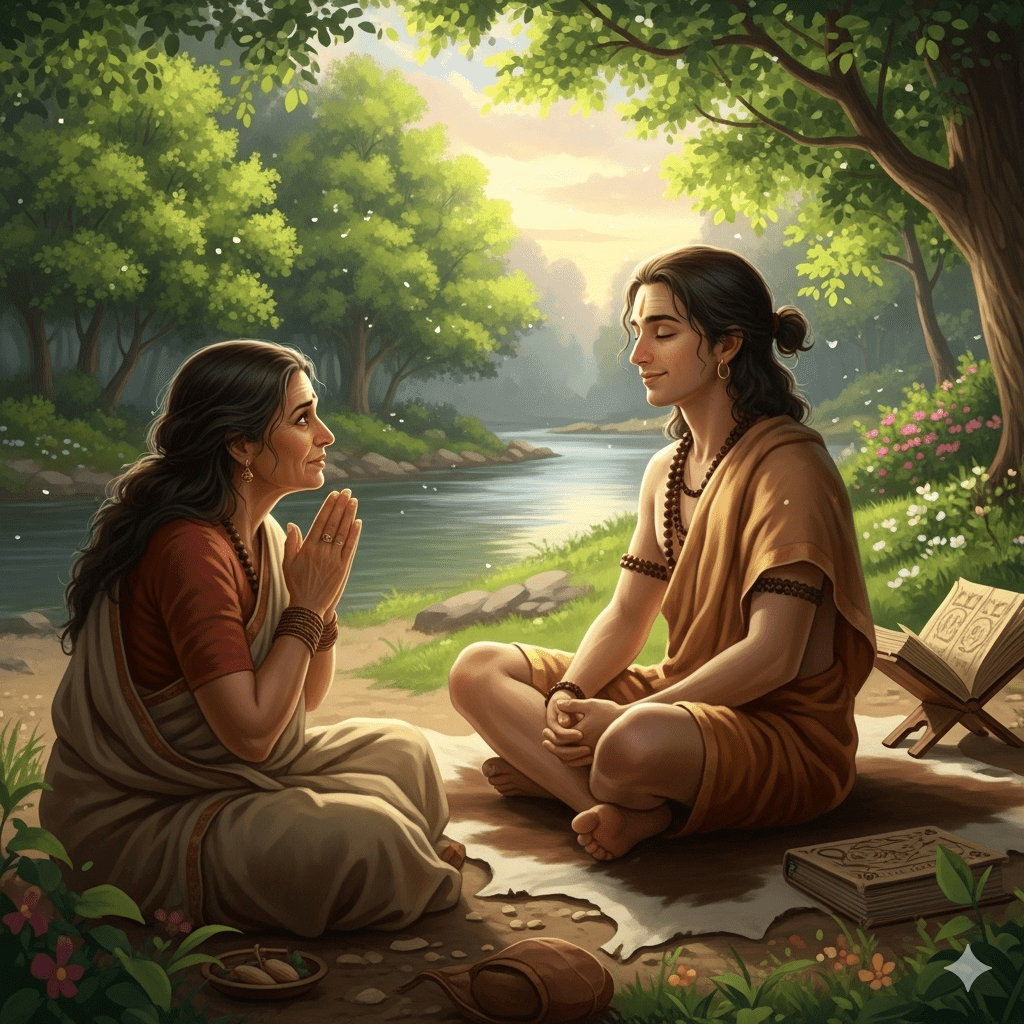
7.) Devahūti said: I am awfully sick of the craving (for enjoyment) of my wicked senses, O Perfect One! It is because of my unremitting efforts to gratify this craving that I have fallen into the deep abyss of ignorance, O Bhagavān.
8.) In this present birth, which I am sure is going to be the last of a long series, I have now, by Your grace, secured in You an excellent eye to enable me to see through this thick veil of darkness, which is so difficult to penetrate.
9.) You are no other than the Bhagavān, the most ancient Person and the Ruler of all embodied souls, who has appeared, like the sun, as an eye to the world blinded by ignorance.
10.) Now be pleased, my lord, to dispel my great delusion; for the feeling of I-ness with reference to the body and that of mine-ness in respect of all that is connected with it have been inspired by You.
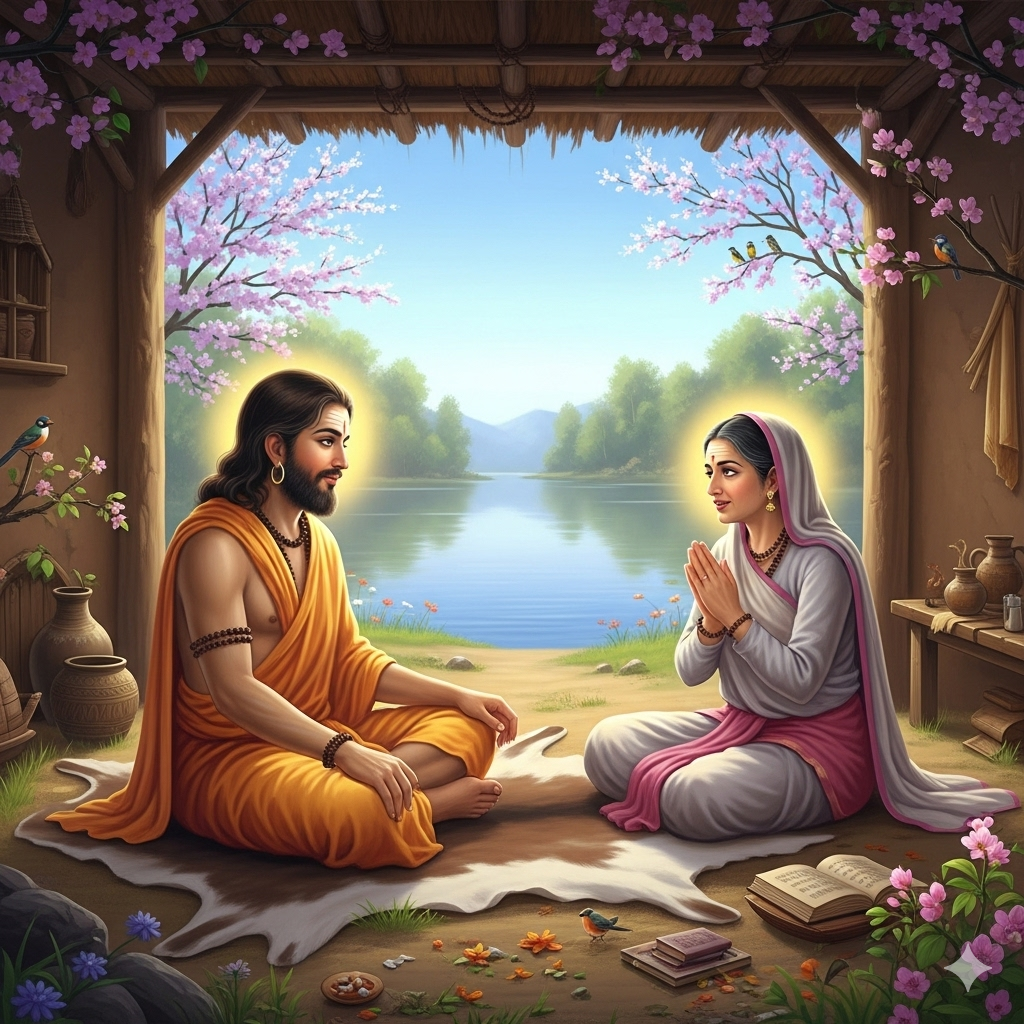
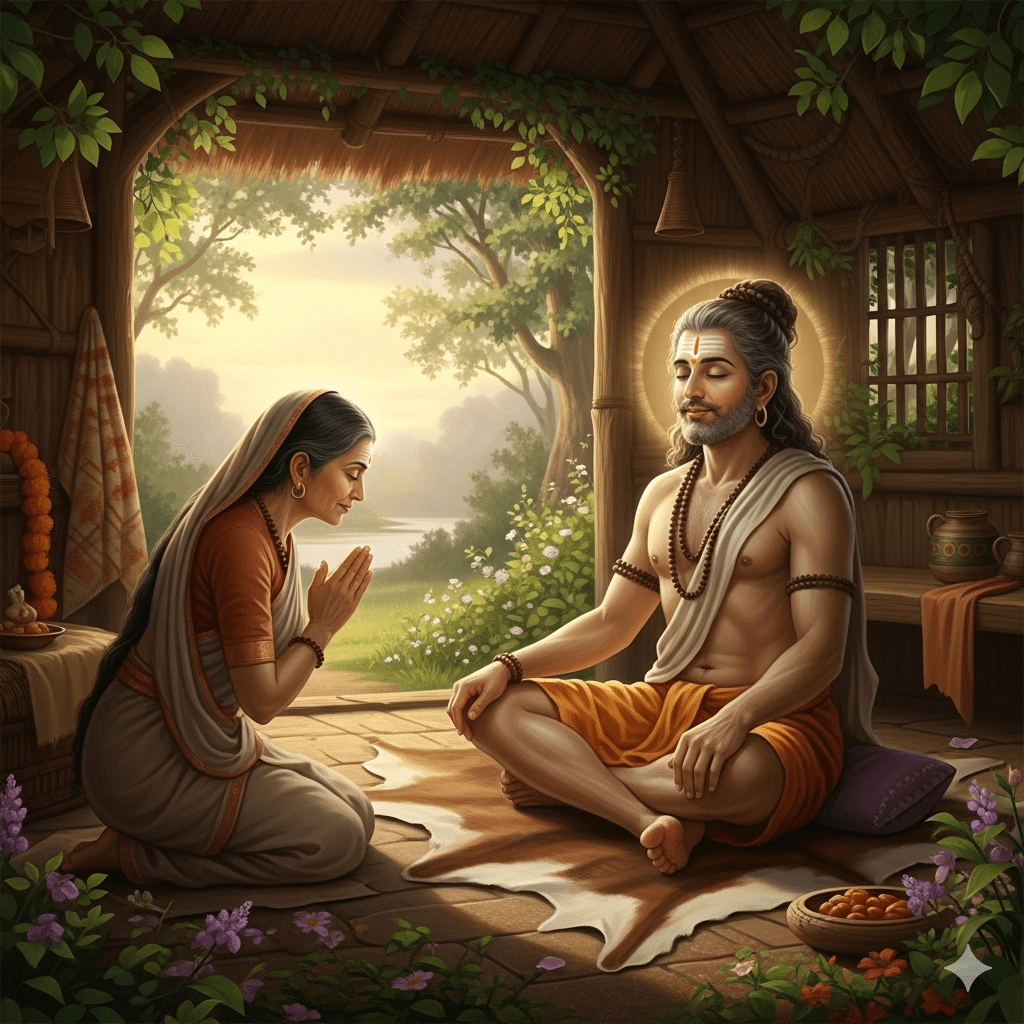
11.) For ascertaining the true nature of Prakṛti (Matter) and Puruṣa (Spirit) I have sought refuge in You, who afford protection to all and are a veritable axe to the tree of metempsychosis in the case of Your devotees. I bow to You, the foremost of those knowing the secret of true dharma.
12.) Maitreya continued: On hearing of His mother’s innocent desire, which was calculated to stimulate in men the longing for liberation, the Bhagavān, who is the goal of noble souls that have subdued their self, mentally approved of it and spoke as follows, His countenance beaming with a gentle smile.
13.) The Bhagavān said: In my opinion, the only means to final beatitude is Yoga in the form of contemplation on the Supreme Spirit, which is characterized by absolute cessation of both joy and sorrow.
14.) I shall now explain to you that very Yoga, which is perfect in every limb, and which I taught of yore to sages (like Nārada), who were keen to hear of it, O virtuous lady.
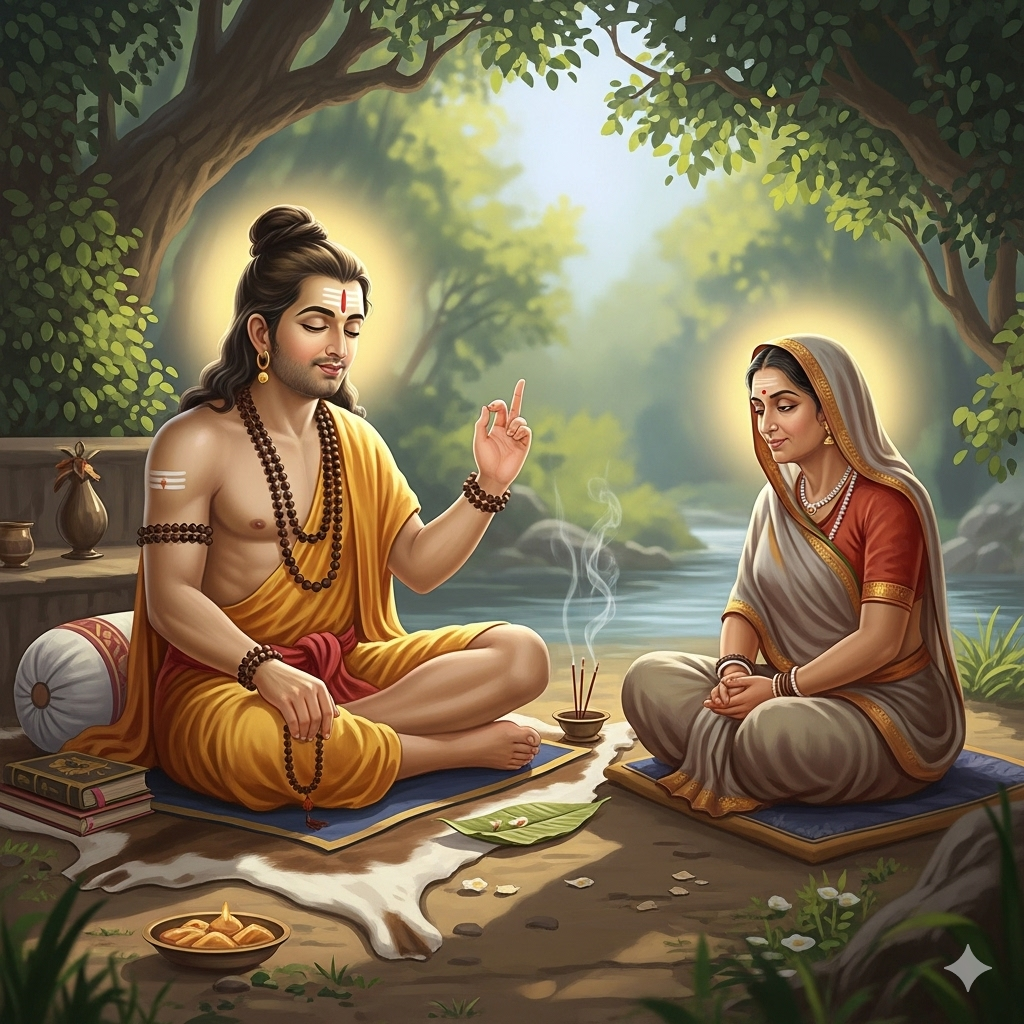
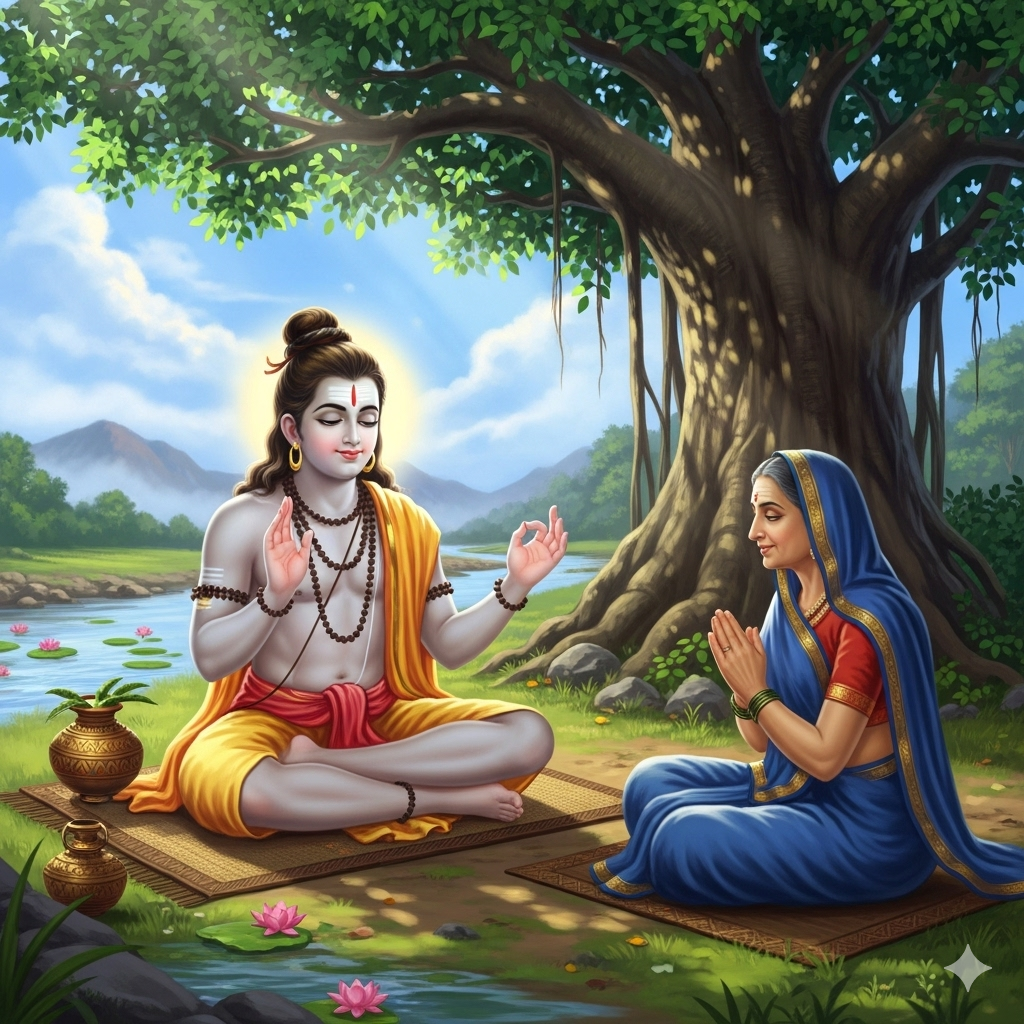
15.) Mind alone is held responsible for the bondage and emancipation of the soul. Attached to the objects of senses, it leads to bondage; when, however, it develops affinity to the Supreme Person, it brings liberation to the soul.
16.) When the mind is purged of its impurities in the form of lust, greed, etc.—which have their root in the sense of I-ness and mine-ness—and becomes pure, it grows indifferent to pleasure and pain and gets equipoised.
17-18.) With a mind equipped with true knowledge and dispassion as well as with Devotion, the Jiva (individual soul) then perceives the Self as one (without a second), undifferentiated, self-effulgent, subtle, indivisible, unattached and beyond Prakṛti (Matter), and Prakṛti as reduced in strength.
19.) For striving souls there is no blissful road to God-Realization like Devotion directed towards the Bhagavān, who is the Soul of the universe.


20.) The wise consider attachment as an unyielding fetter for the soul. The same, however, serves as an open door to liberation, when it is directed towards Bhagavān.
21.) Saints are forbearing, compassionate and composed; they are friendly to all living beings and inimical to none, and follow the injunctions of the Śāstras. Their good disposition itself serves as an ornament to them.
22.) With an undivided heart they practise unflinching devotion to Me; and for My sake they abandon even their obligatory duties and forsake their kinsmen and relatives.
23.) Nay, they listen to and narrate delightful stories relating to Me, their mind ever set on Me. Afflictions of various kinds, therefore, never torment such people.

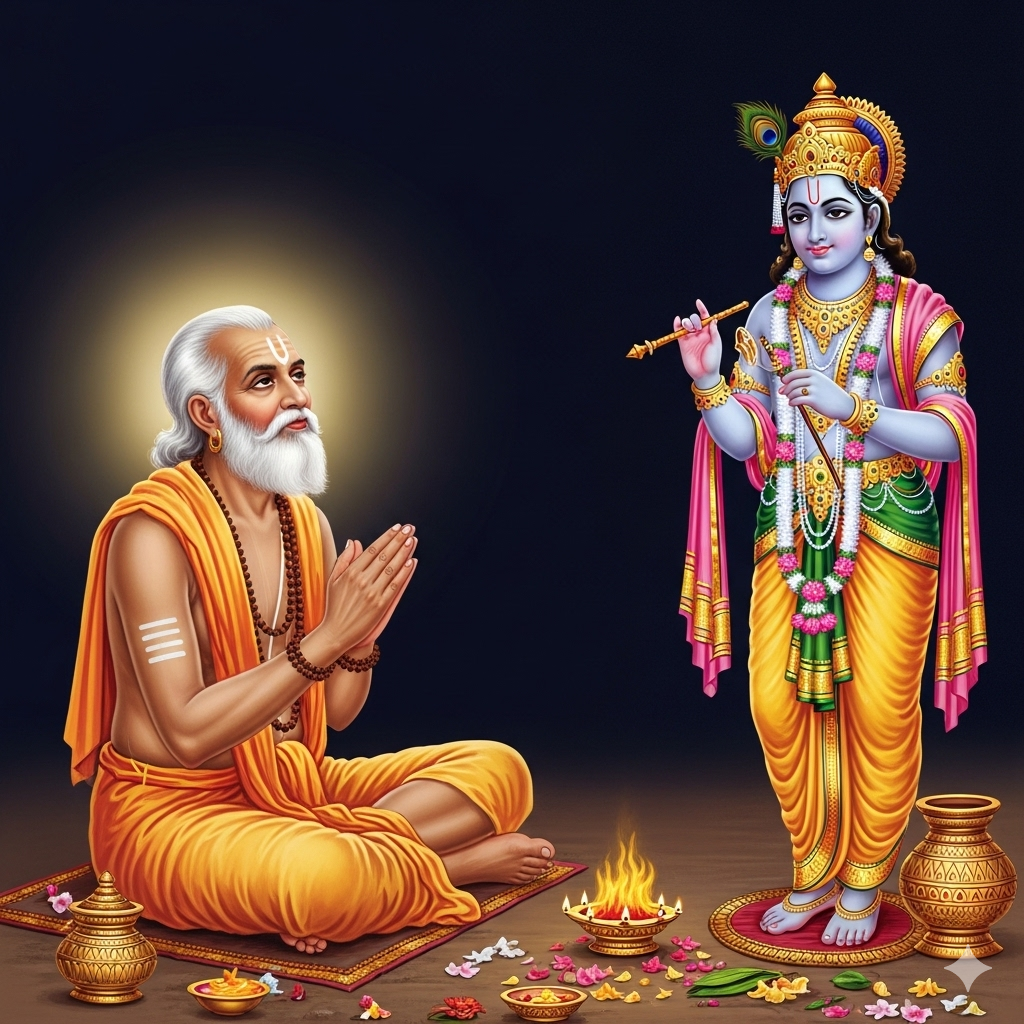
24.) Such are holy men, free from all attachment, O virtuous lady. Attachment to such holy men must be sought for by you; for they counteract the pernicious effects of attachment.
25.) Through the fellowship of saints one gets to hear My stories, leading to a correct and full knowledge of My glory and pleasing to the heart as well as to the ear. By hearing such stories one is sure to develop one after another reverence and fondness for and devotion to Bhagavān, whose realization is preceded by the cessation of ignorance.
26.) Developing distaste for the pleasures of sense, belonging to this world as well as to the next, through Devotion engendered by contemplation on My pastimes connected with the creation, preservation and dissolution of the universe, the person who enjoys the fellowship of saints will diligently and devoutly strive to subdue his mind through easy processes of Yoga (Devotion).
27.) Through renunciation of the material objects of sense, through wisdom supplemented by dispassion, through Yoga (concentration of mind) and through Devotion directed towards Me, man attains to Me, the Self of all embodied souls, in that very life.
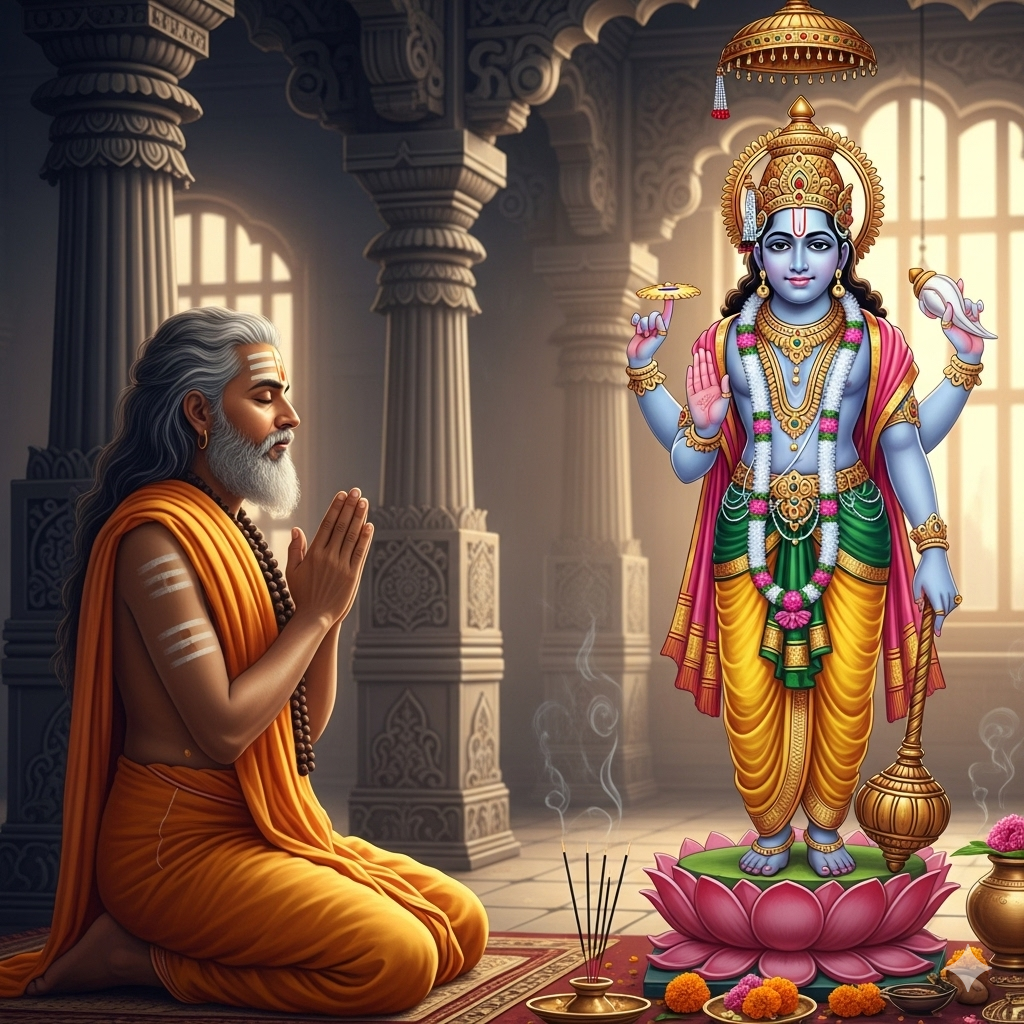
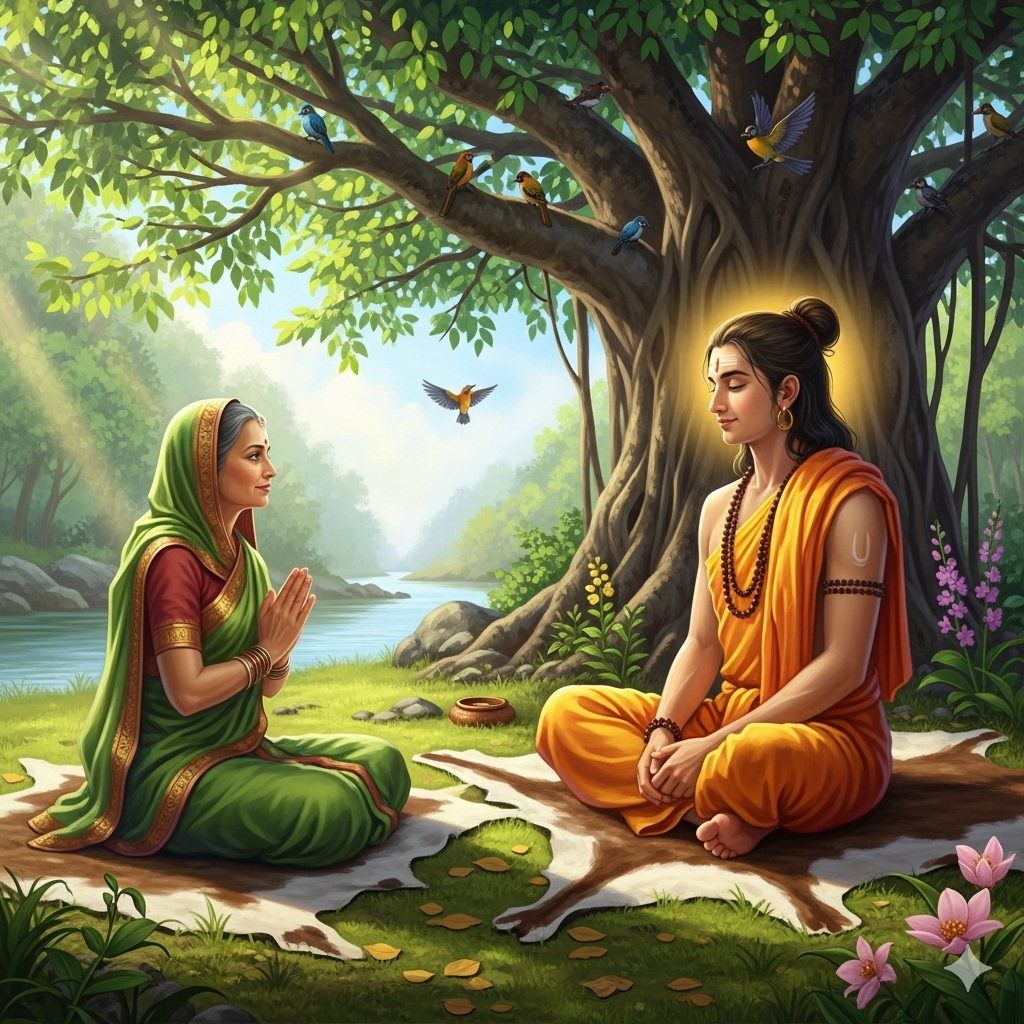
28.) Devahūti said: What kind of Devotion is worth developing towards You, and what is the type fit to be practised by me, through which I may easily and immediately attain to Your Being, a synonym for Liberation?
29.) What is the character of the Yoga (discipline) referred to by You, O Embodiment of supreme bliss, as a direct means to God-Perception (like an arrow which goes straight to its target) as well as to the realization of Truth; and how many are the processes supplementary to the same?
30.) Kindly explain all this to me in such a way that I, a dull-witted woman, O Hari, may understand the difficult process with ease by Your grace.
31.) Maitreya resumed: Having thus learnt the object of His mother (Devahūti) through whom He had appeared in a human semblance, Kapila was filled with affection for her and expounded the system of philosophy which teaches the fundamental principles (such as Prakṛti, Puruṣa, etc.) and which they call Sāṅkhya, as well as the elaborate course of Devotion and Yoga (the process of meditation and other methods of mind-control).
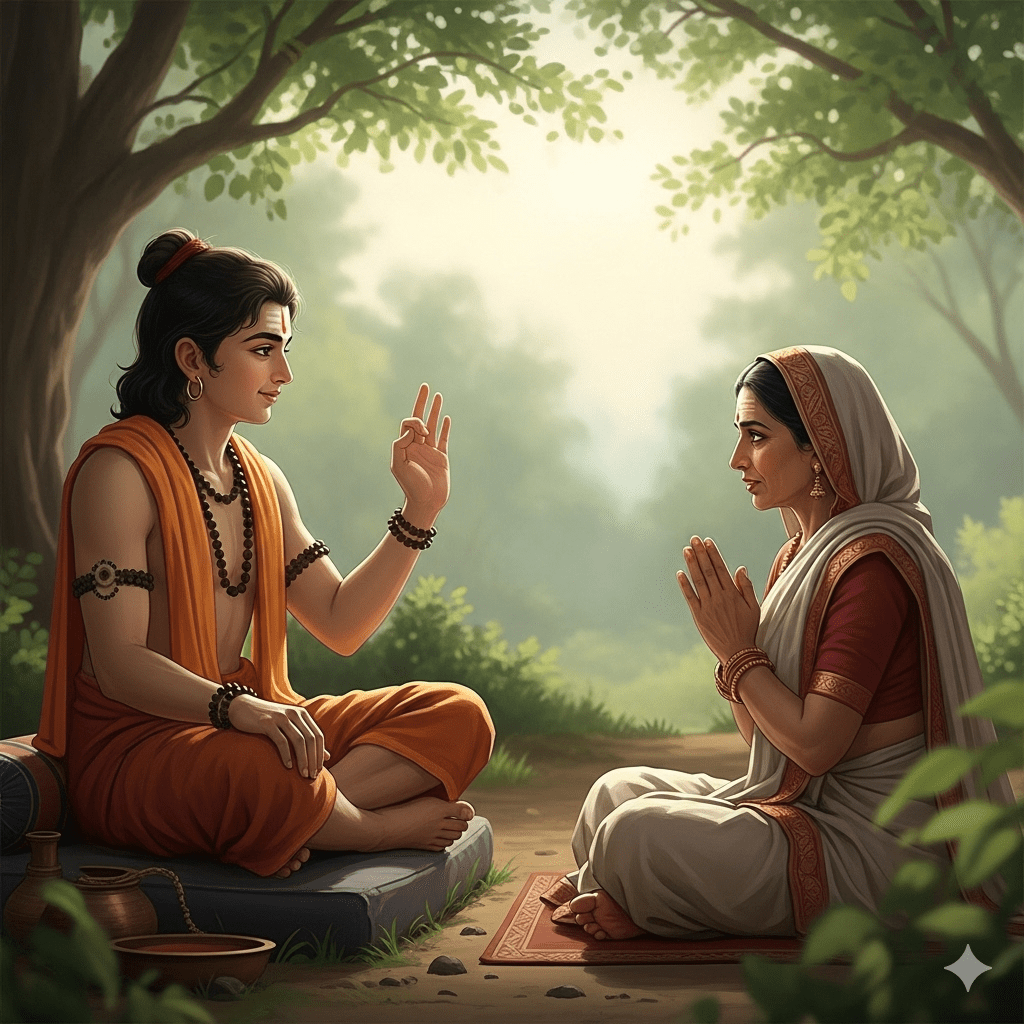

32-33.) Bhagavān said: Motiveless devotion to Bhagavān may be defined as the natural inclination towards Bhagavān, who is an embodiment of Sattva (goodness) of the senses of a man of undivided mind, which are the only means of perceiving the objects, as well as of his organs of action, which are engaged in activities enjoined by the Vedas. Devotion (as defined above) is superior to final beatitude itself in that it speedily dissolves the subtle body even as the gastric fire digests the food that is devoured.
34.) Some devotees of the Bhagavān—who ever delight in the service of My feet and are engaged in activities only for My sake, and who lovingly sing to one another of My exploits alone—crave not even for absorption into My Being.
35.) The aforesaid saints, O mother, behold My charming and divine forms possessed of a smiling face and ruddy eyes—forms which confer boons on them—and have talks with them, which are the envy even of the greatest sages.


36.) Their devotion (to Me) secures to them (a place in) My subtle Abode even though they never seek it, their mind and senses fascinated by those forms with attractive limbs, captivating playful gestures, glances accompanied with a smile and delightful speech.
37.) They no longer crave for the wealth and enjoyments of Satyaloka (the highest heaven) and the other spheres falling within My jurisdiction as the Lord of Māyā, nor for the eight kinds of supernatural powers that come to them of their own accord as a sequel to Devotion, nor even for the wealth and splendour of the Lord’s own realm (Vaikuṇṭha), which are full in every respect; yet they do enjoy these in that Abode of the Supreme.
38.) They who depend on Me, nay, to whom I am the only object of love, nay, the very self, the son, the friend, the preceptor, the kith and kin and the chosen deity, are never deprived of these enjoyments in Vaikuṇṭha (which consists of pure Sattva); nor does My weapon in the shape of Time ever devour them.
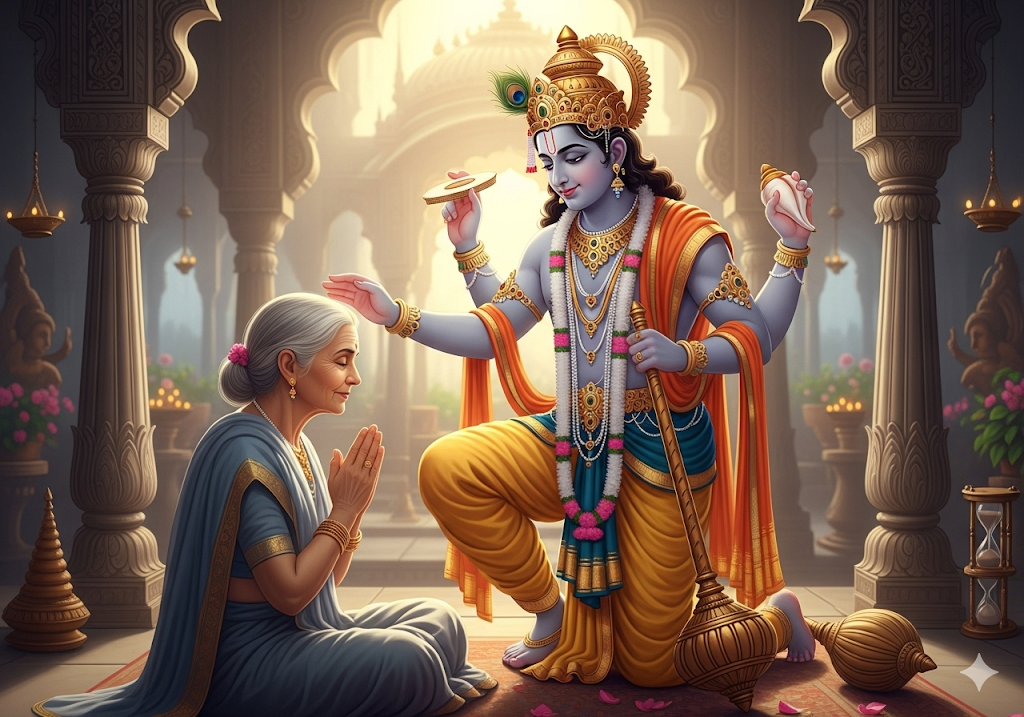
39-40.) I take them once for all to the other side of death (the ocean of birth and death), who worship Me with exclusive devotion in the aforesaid manner, realizing My presence in every quarter and renouncing this world and the next, nay, even their own conditioned self (in the shape of their subtle body), which wanders through both, and all those who are connected with the same here (viz., one’s near and dear ones) as well as (one’s possessions such as) wealth, cattle and houses and everything else.
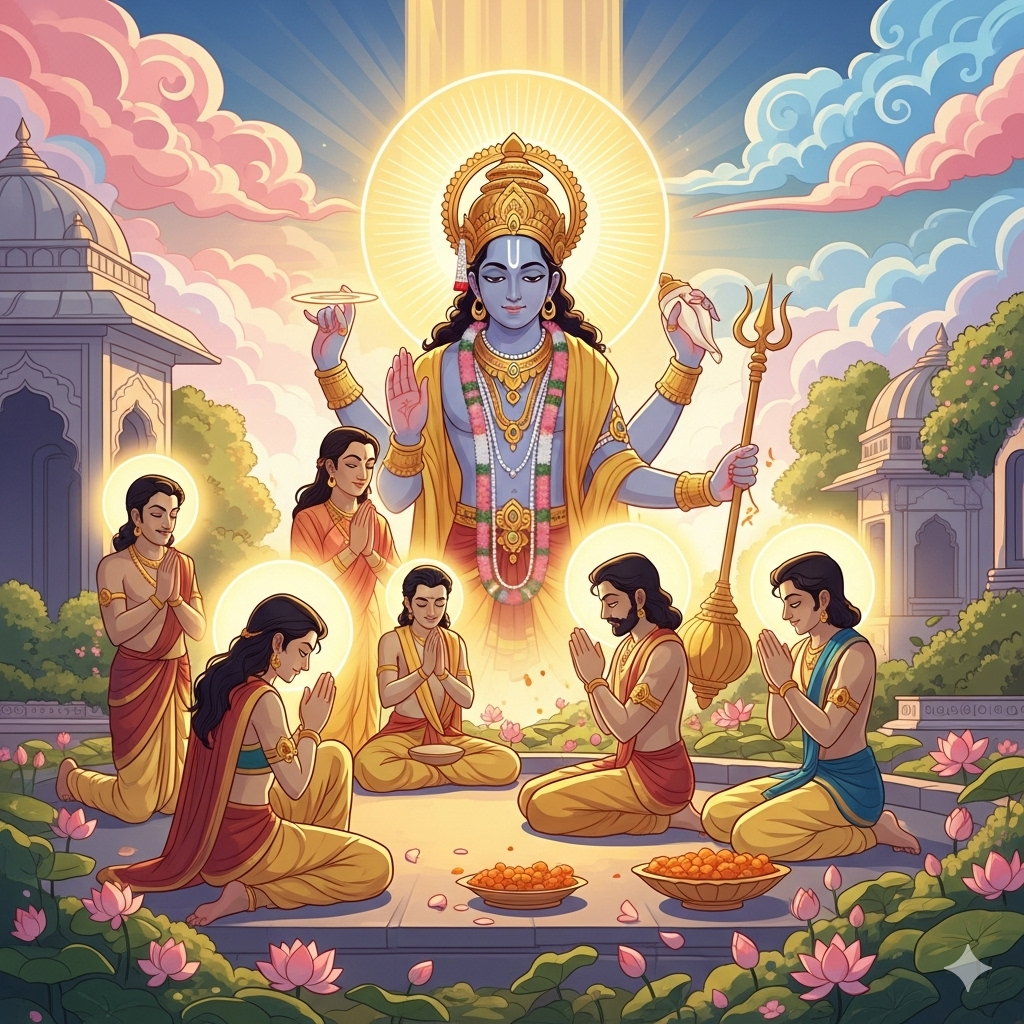

41.) The terrible fear of birth and death can never be got rid of by resorting to anyone other than Myself, the almighty Bhagavān, the Ruler of both Prakṛti and Puruṣa (Matter and Spirit), the Self of all living beings.
42.) It is through fear of Me that the wind blows; it is through fear of Me that the sun shines; it is through fear of Me that Indra (the god of rain) sends forth showers, fire burns and death goes about (taking its toll).
43.) For lasting happiness the Yogis (striving souls) betake themselves through the practice of Devotion, accompanied by spiritual Knowledge and Dispassion, to My feet, which are free from fear (of every kind).
44.) A mind fixed on Me through the intense practice of Devotion and steadied thereby is the only means for men in this world to attain final beatitude.
Thus ends the twenty-fifth discourse entitled “Dialogue between Kapila and Devahūti: Importance of the Bhakti-yoga”, in Book Three of the great and glorious Bhāgavata Purāṇa, otherwise known as the Paramahaṁsa-Saṁhitā (the book of the God-realized Souls).
