Chapter 24 – Kapila’s Incarnation
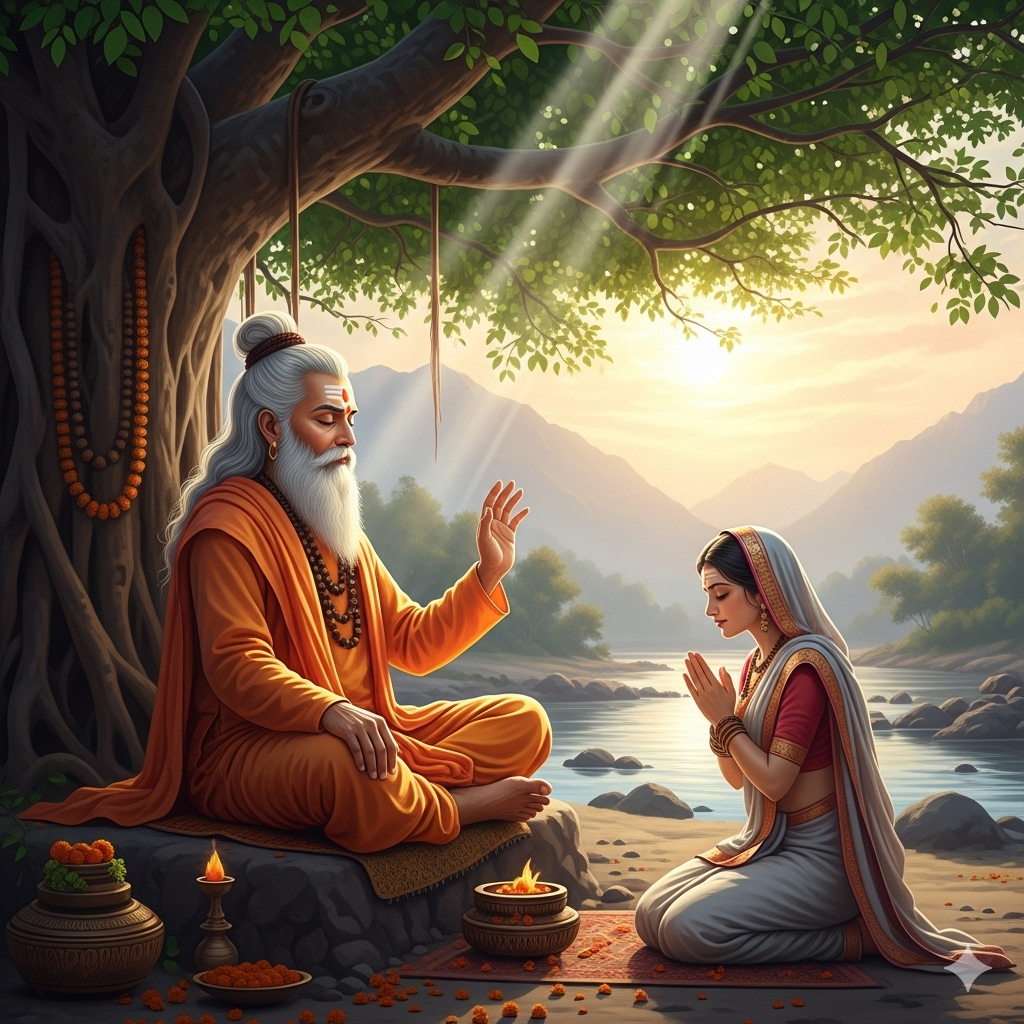
1.) Maitreya resumed: When Devahūti (the daughter of Svāyambhuva Manu), who was worthy of all praise, spoke such words full of dispassion, the merciful sage recalled the words of Bhagavān Viṣṇu and replied as follows.
2.) The sage said: Worry not about yourself, O princess of irreproachable conduct. The immortal Bhagavān will enter your womb at no distant date.
3.) You have undertaken sacred vows—blessings upon you! Therefore, adore Bhagavān with reverence through control of the senses and religious observances, as well as through austere penance and charitable gifts.
4.) Propitiated by you, Bhagavān Viṣṇu will be born as your son, thereby spreading my renown also. He will cut the knot of ignorance (in the form of false self-identification with the material sheaths) existing in your heart, by instructing you in the knowledge of the Ātman.

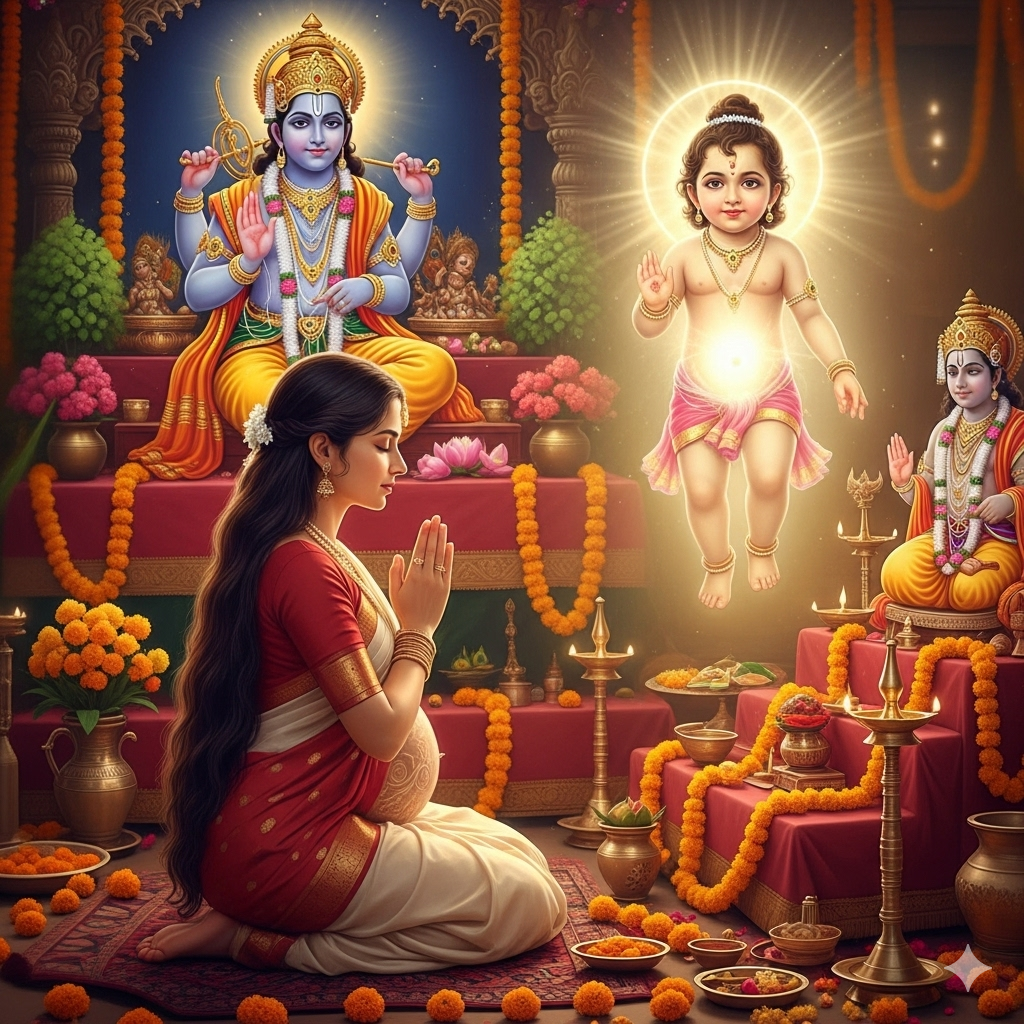
5-6.) Maitreya went on: Reposing full faith in the message of the sage Kardama (a Prajāpati, lord of created beings), and out of great regard for him, Devahūti devoted herself to the worship of the immutable Supreme Person, the Preceptor of the world. After a long time, Bhagavān Viṣṇu (the slayer of the demon Madhu) manifested Himself first through the generative fluid of Kardama and then through Devahūti, even as fire appears through firewood.
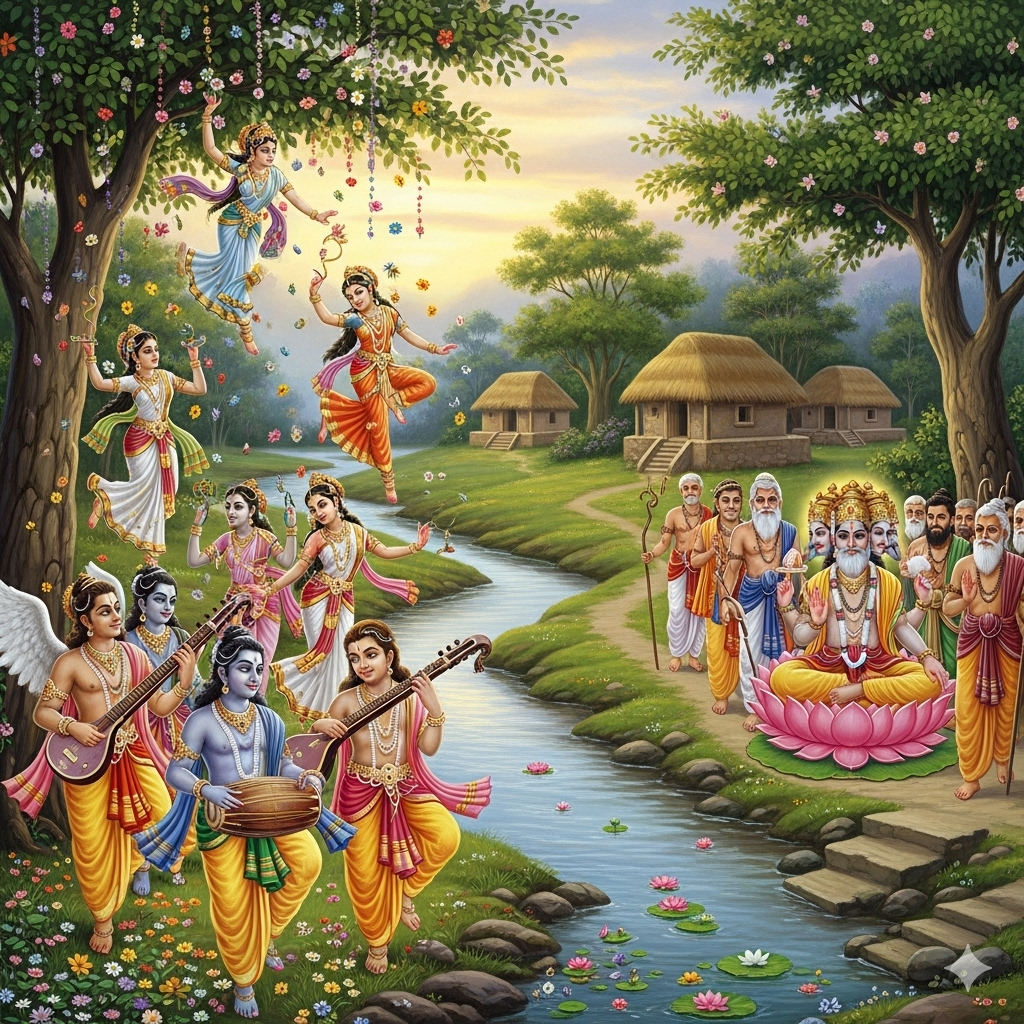
7.) At the time of His descent, the gods in the form of raining clouds sounded musical instruments (thunder-claps) in the sky; the Gandharvas (celestial musicians) sang His praises; and the Apsarās (celestial nymphs) danced in joy.
8.) Heavenly flowers rained from the skies by the gods flying in the air; all the quarters, the waters of rivers and lakes, and even the minds of people became serene.

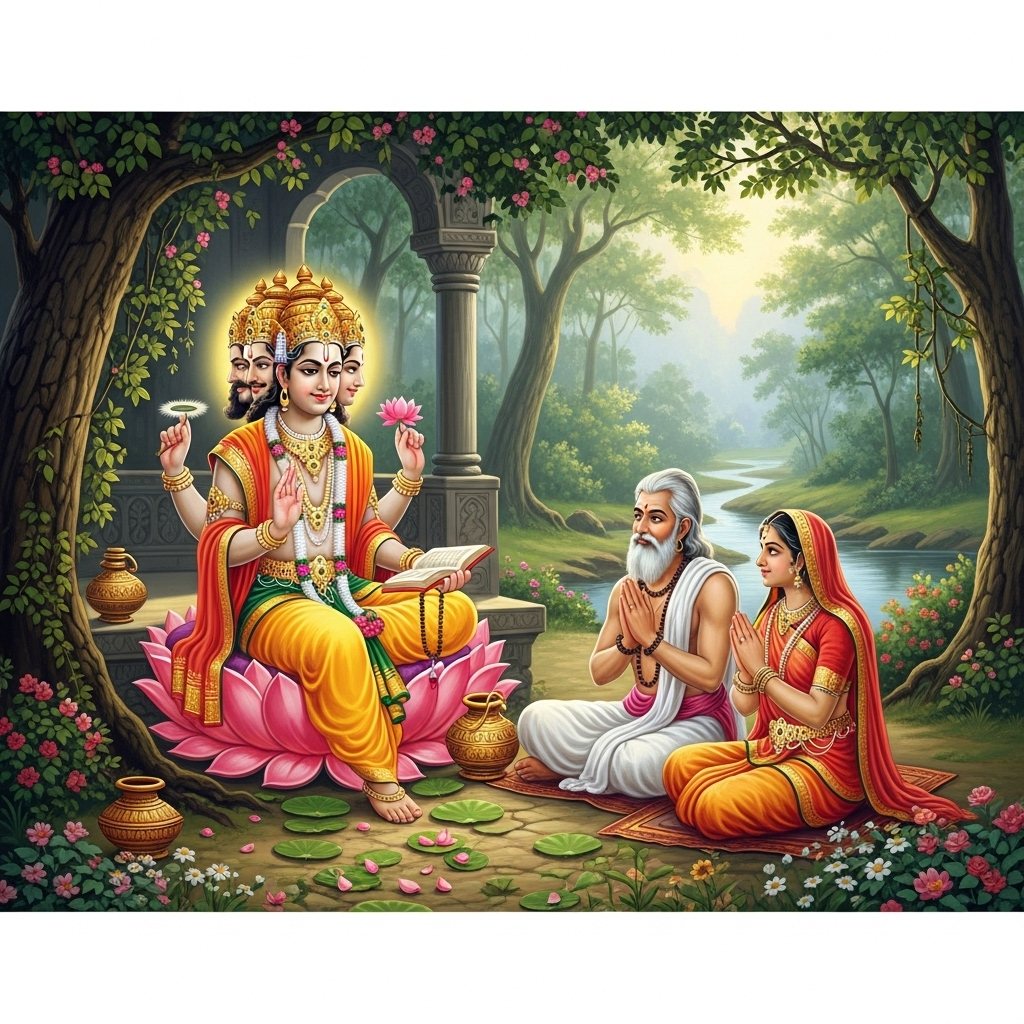
9.) Brahmā (the self-born) went along with Marīci and the other sages to the celebrated hermitage of Kardama, which was surrounded by the river Sarasvatī.
10.) Brahmā, who is naturally possessed of true wisdom, already knew that the Lord—none other than the Supreme Brahman—had descended through pure sattva to impart the knowledge of the Sāṅkhya philosophy (which discerns the fundamental principles of reality), O vanquisher of foes.
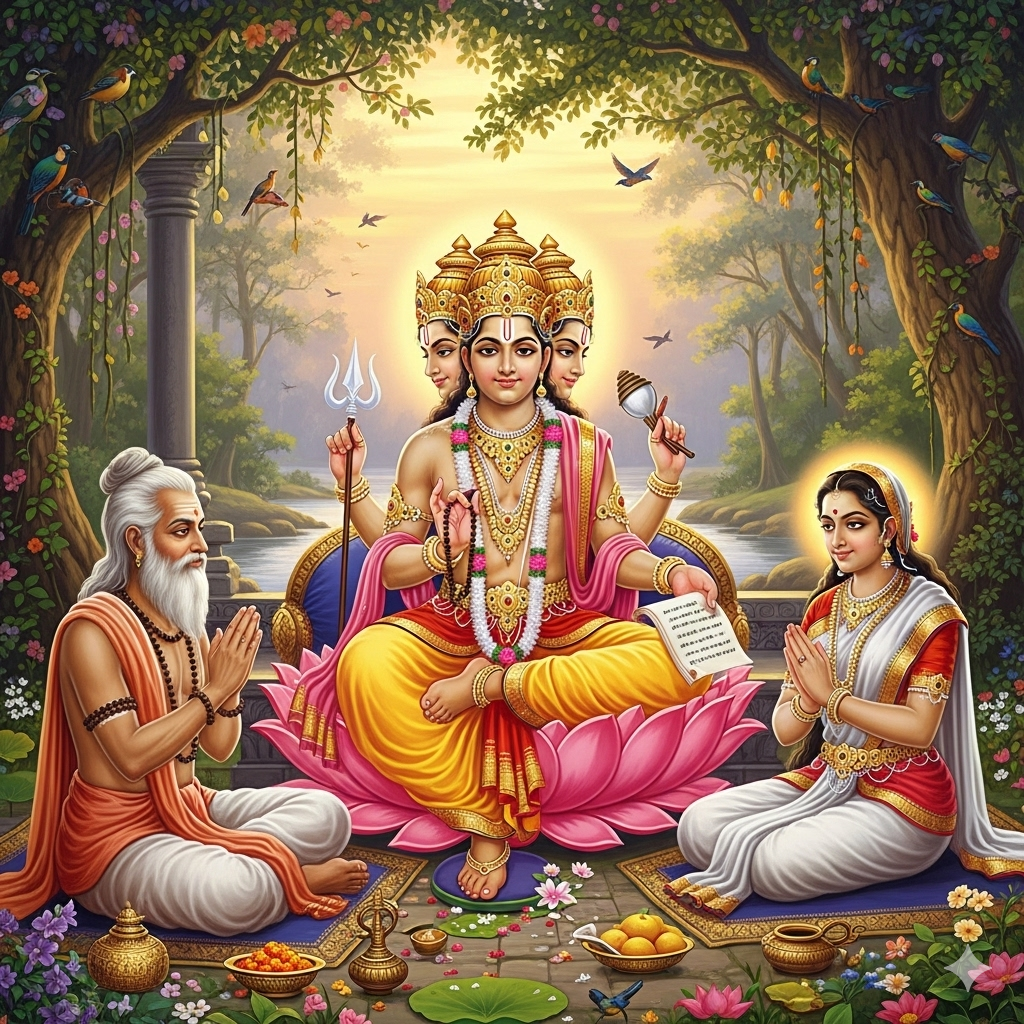
11.) Welcoming with a guileless mind the intention of the Lord, the Creator spoke thus to Kardama and Devahūti, with his senses greatly delighted.
12-13.) Brahmā said: Dear son, you have truly worshipped me, in that you reverently carried out my command, O respectful one! This indeed is the service sons ought to render to their father: they should bow to the command of their father with due deference, saying “So be it.”
14.) These slender-waisted daughters of yours, my worthy child, will multiply this creation manifold through their descendants.
15.) Therefore, give away your daughters today itself to the foremost of the sages, with due regard to the girls’ temperament and choice, and thereby spread your fame all over the earth.
16.) I know that the most ancient Person, the bestower of boons to all beings, has descended through His own Māyā (wonderful creative power) in the person of Kapila, O Kardama.
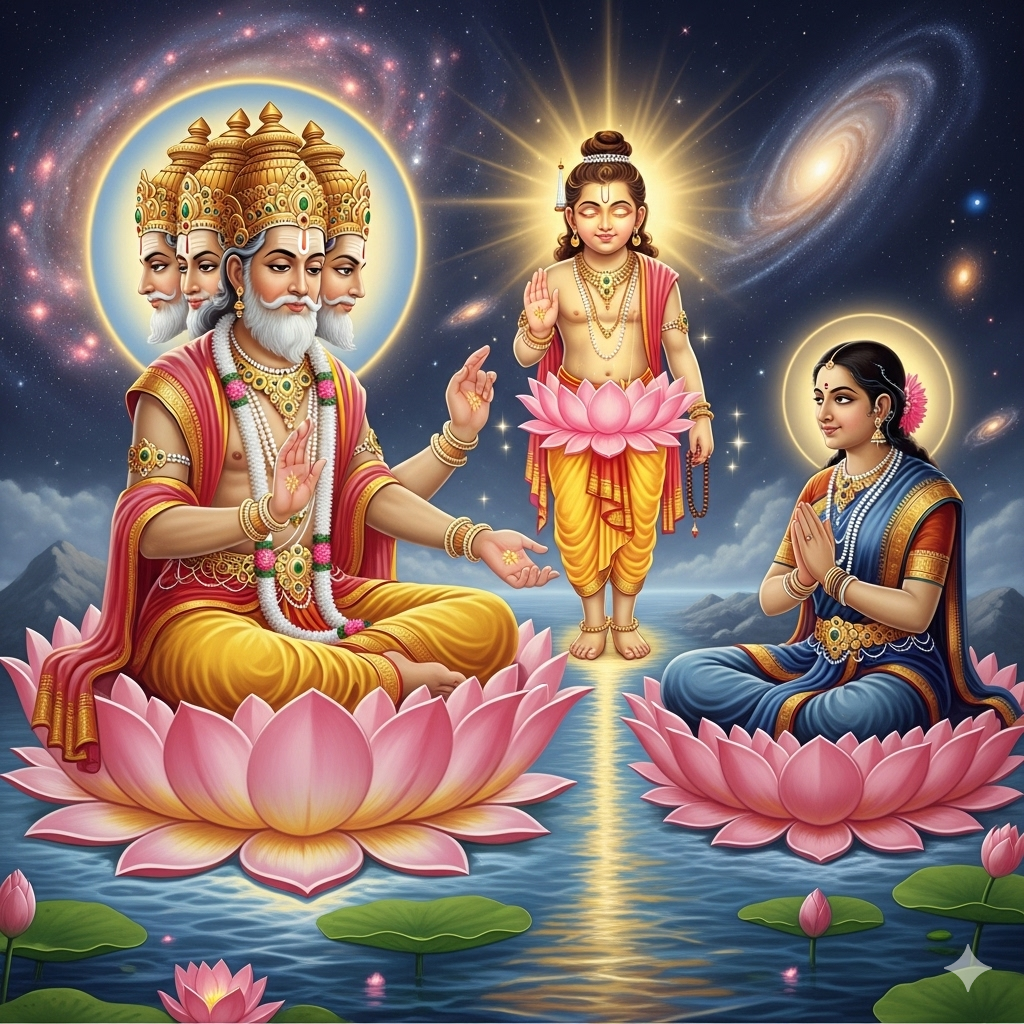
17-18.) (Turning to Devahūti, he said:) With golden hair, lotus-like eyes, and lotus-feet whose soles bear the mark of a lotus—it is Bhagavān Viṣṇu (the slayer of the demon Kaiṭabha) who has been born of you, O Devahūti (daughter of Svāyambhuva Manu), to uproot the bondage of karma (in the form of latent desires) through the instrumentality of scriptural knowledge and realization. Having cut the knot of ignorance and delusion, He will roam upon the earth.
19.) He will be the Lord of the Siddhas, held in esteem by the teachers of the Sāṅkhya system. He will be known throughout the world by the name Kapila, and will spread your glory.
20.) Maitreya continued: Having thus reassured the couple, Brahmā, the creator of the universe, mounted his swan and returned to Satyaloka (the highest realm beyond the three worlds) along with Sanaka and his three brothers, and with Nārada—all lifelong celibates—while leaving behind Marīci and the other sages to wed the daughters of Kardama.
21.) After the departure of Brahmā, O Vidura, the sage Kardama immediately gave his daughters in marriage to the Prajāpatis (lords of creation—Marīci and others), as directed by the Creator, and according to the injunctions of the Śāstras.
22.) He gave Kalā to Marīci, Anasūyā to Atri; Śraddhā to Aṅgiras, and Havirbhu to Pulastya.
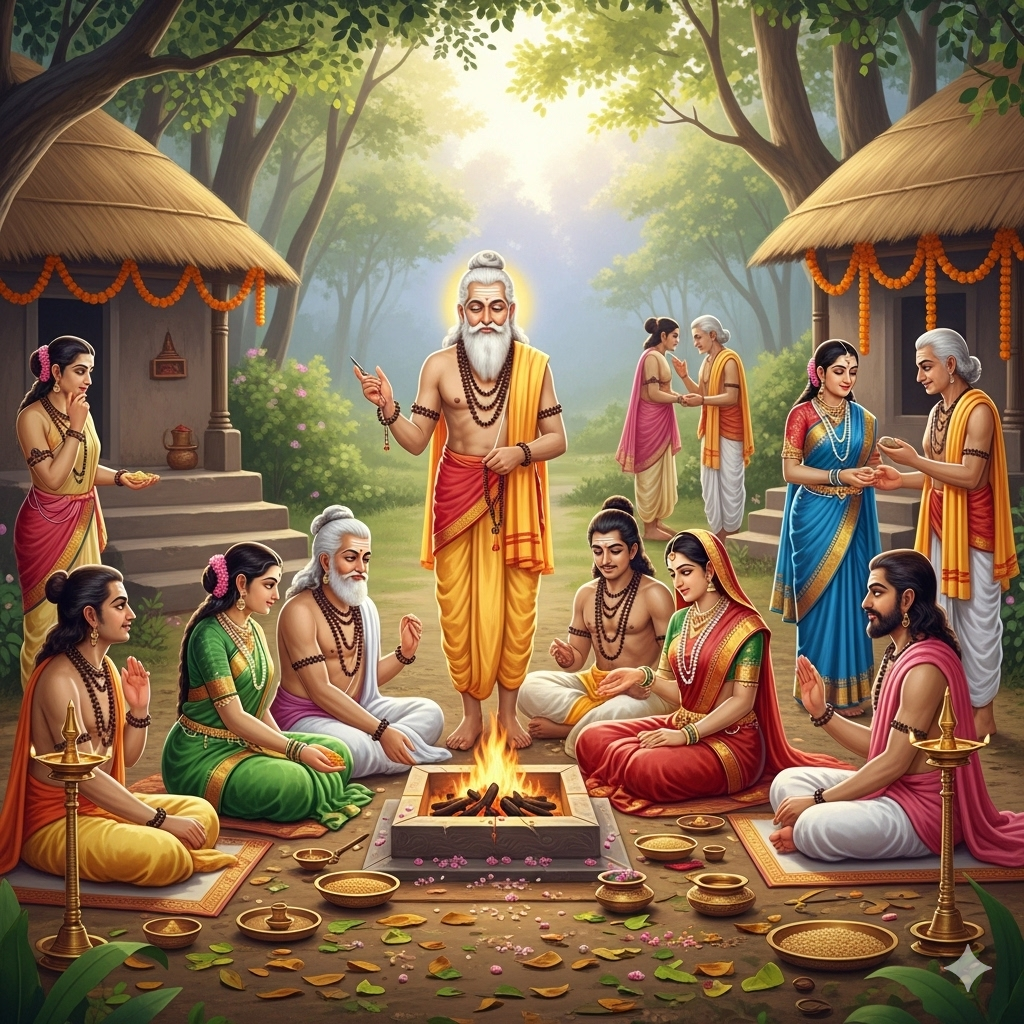
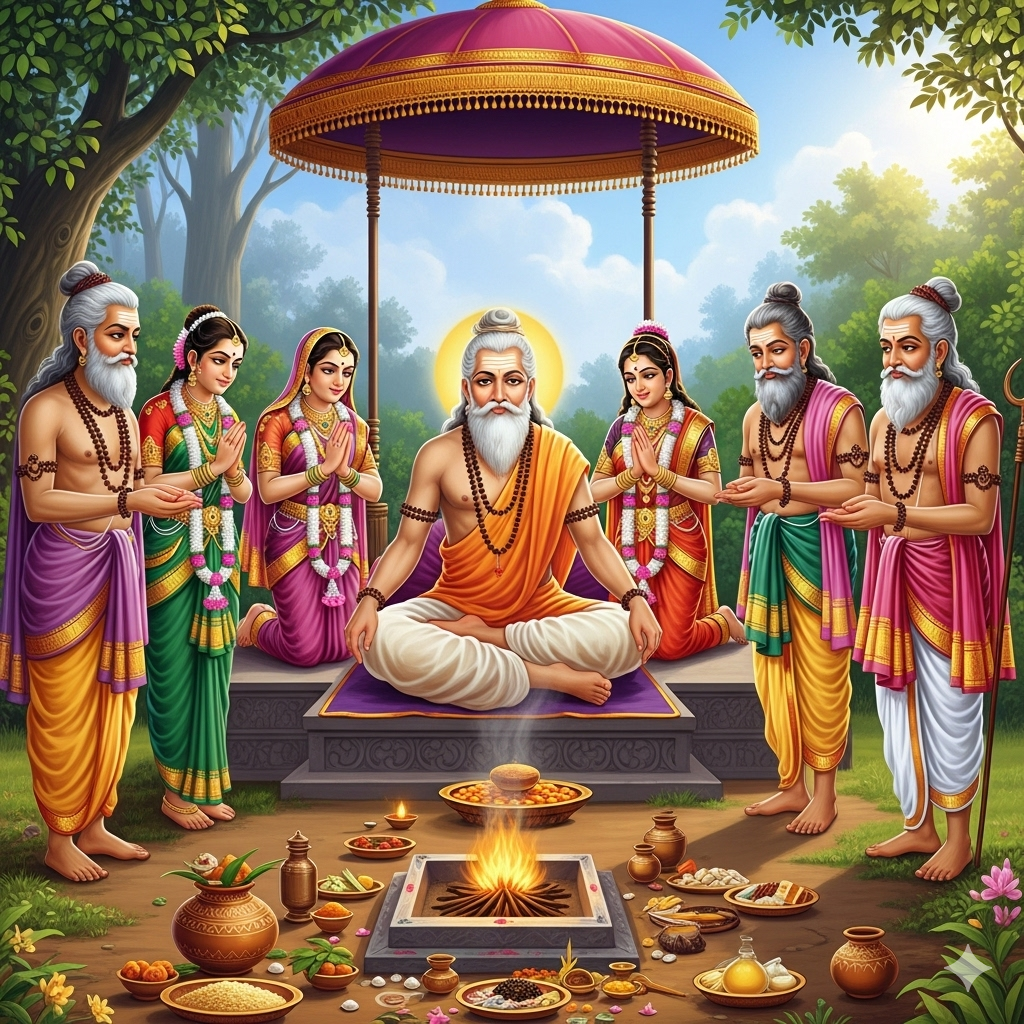
23.) He further gave Gati, worthy of Pulaha, to him; the virtuous Kriyā to Kratu; Khyāti to Bhṛgu; and Arundhatī to Vasiṣṭha.
24.) And to Atharvā he gave Śānti, through whom sacrifices are successfully completed. When the marriages were duly performed, Kardama honored these sages and their wives.
25.) Thus married, the sages joyfully took leave of Kardama and departed each to his own hermitage.
26.) Realizing that the child born to him was none other than Bhagavān Viṣṇu, possessor of the six divine excellences—power and affluence, virtue and renown, wisdom and detachment—the sage approached Him when He was alone, and, bowing, spoke:
27.) “Alas! On those burning in this hell of transmigration, caused by their own evil deeds, the gods bestow grace only after a long time.
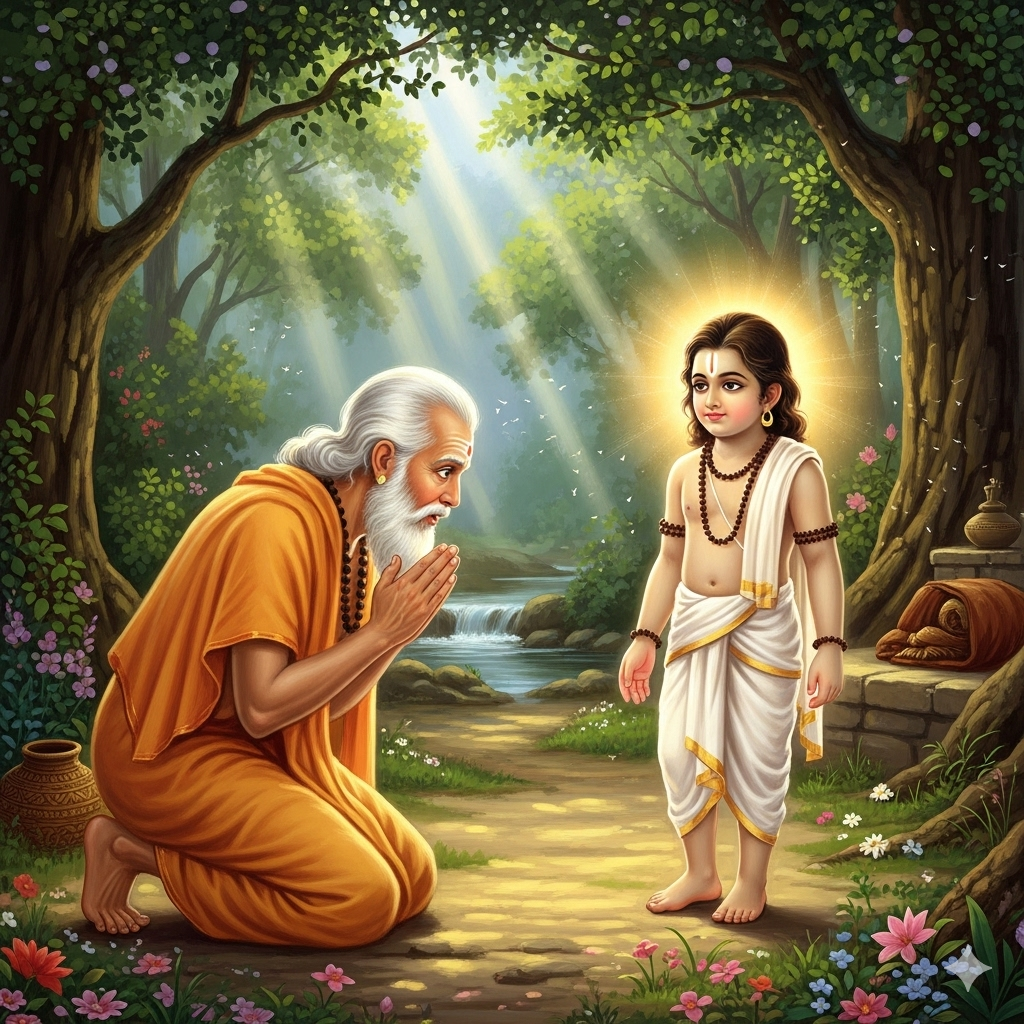
28-29.) Yet You—whom seekers strive to realize in solitude through devotion matured over many lives, and who uplift Your devotees—have this time appeared in the house of people like us, sunk in sensual life, not minding the ignominy of such a birth.
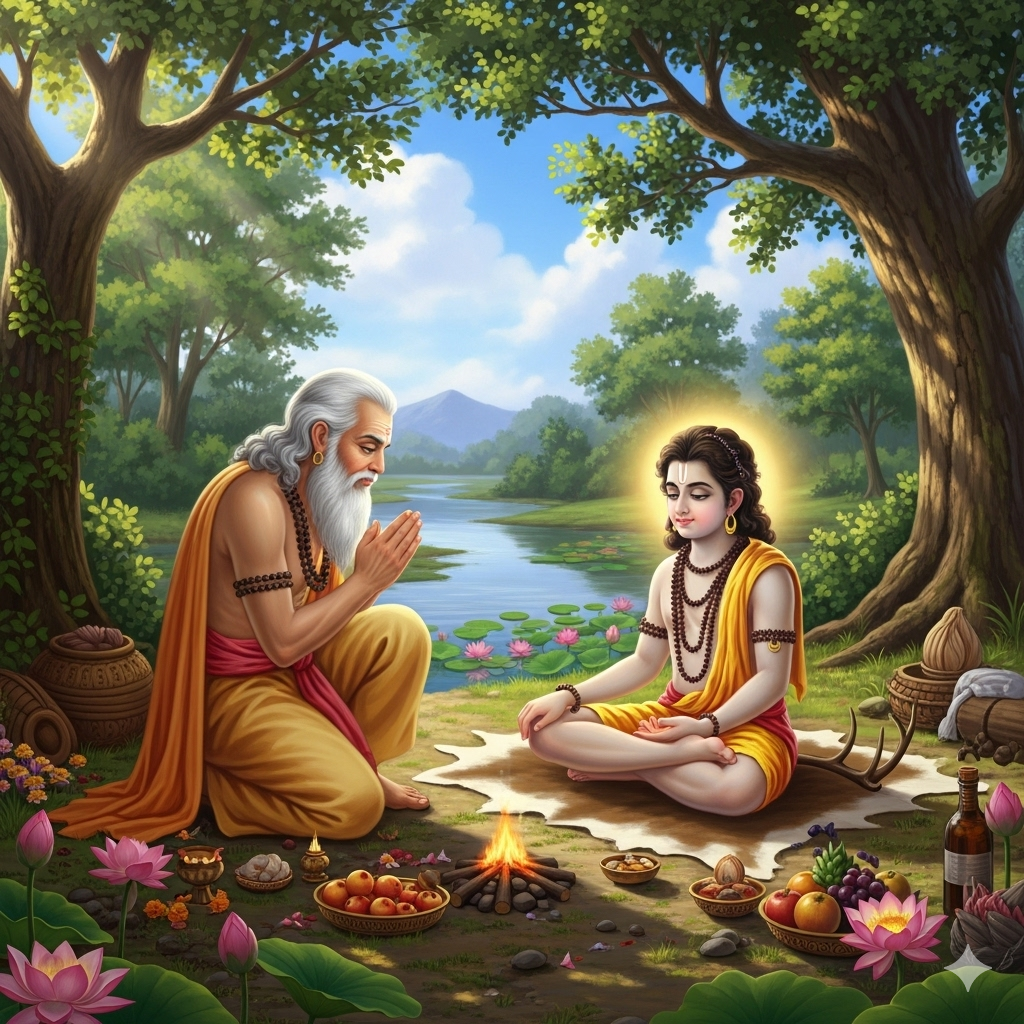
30-31.) Intent on exalting the dignity of Your devotees, You have been born into my house, redeeming Your pledge and founding the Sāṅkhya system that leads to true knowledge. O Lord, only Your transcendental forms are truly worthy of You, yet You delight also in these human semblances for the sake of Your devotees, though You are ever beyond material form.
32.) I take refuge in You, whose footstool is saluted by sages seeking Truth, and who are perfect in power, wisdom, detachment, glory, and affluence.
33-34.) I take refuge in Kapila, the Supreme, who commands all potencies, who manifests as Prakṛti, Puruṣa, Mahat-tattva (cosmic intelligence), Kāla (time), the threefold ahaṅkāra (ego—sāttvika, rājasa, tāmasa), the various worlds and their guardians; and who reabsorbs them all into Himself by His power as pure Consciousness, the eternal Seer. Acquitted of my debt to my father Brahmā (who had commanded me to marry and procreate), and having attained all desires through You, I now seek to renounce worldly life. I take leave of You, O Lord of beings, and will roam freely as a recluse, contemplating You in my heart.”

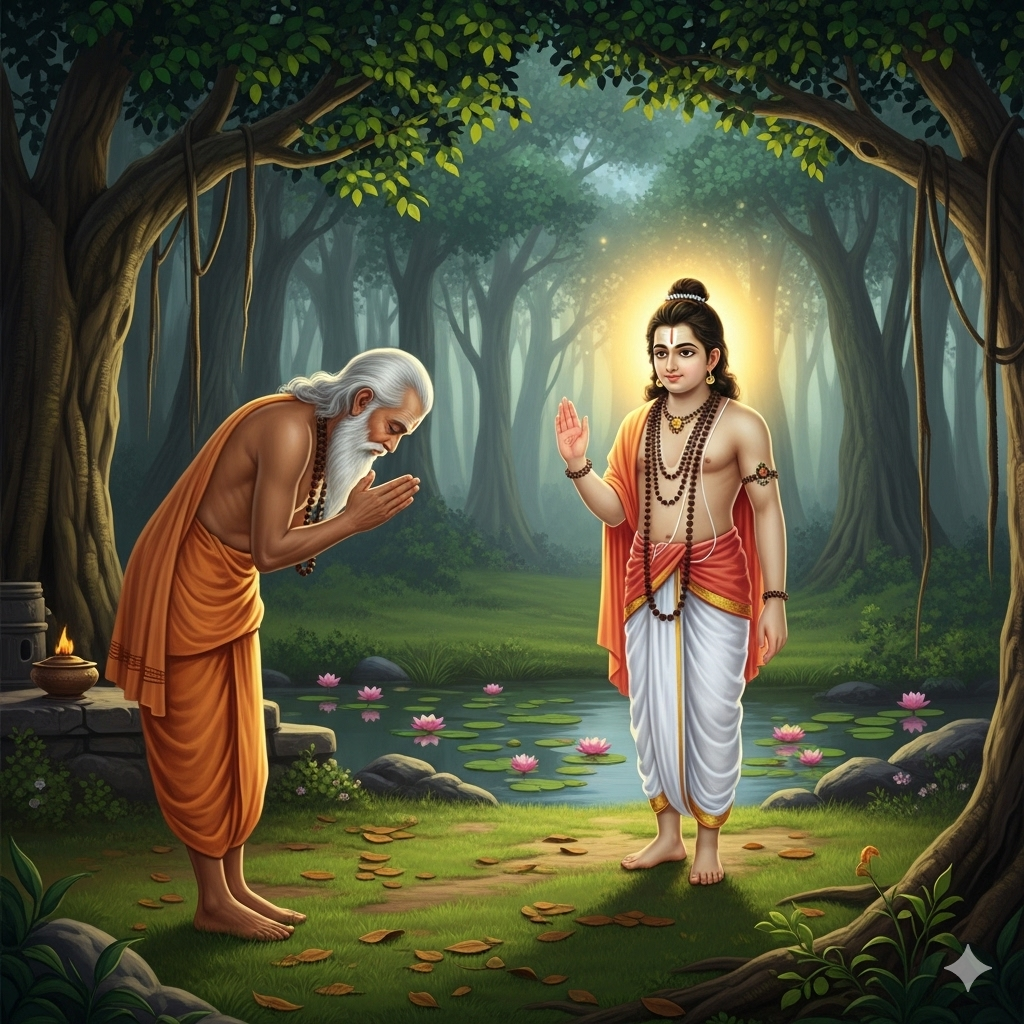
35-36.) The Lord replied: “Whatever I declare is authoritative for the world in both sacred and secular matters. Therefore, only to fulfill My word to you have I taken birth as your son, O sage. My present descent is solely for explaining the true nature of the categories (tattvas) that aid Self-realization for seekers of liberation.
37.) This mysterious path of Self-Knowledge had been obscured for long ages. Know that I have assumed this form to revive that path.
38-40.) Go wherever you will, sustained by My grace. Conquer death—most difficult to conquer—by dedicating your actions to Me, and worship Me with the aim of attaining immortality. Beholding Me—the supreme, self-effulgent Spirit dwelling in all beings—in your own heart by purified intellect, you shall be freed from sorrow and attain fearlessness (final liberation). To My mother Devahūti also I shall impart this supreme knowledge that ends bondage to action, by which she will transcend fear of transmigration and attain bliss.”
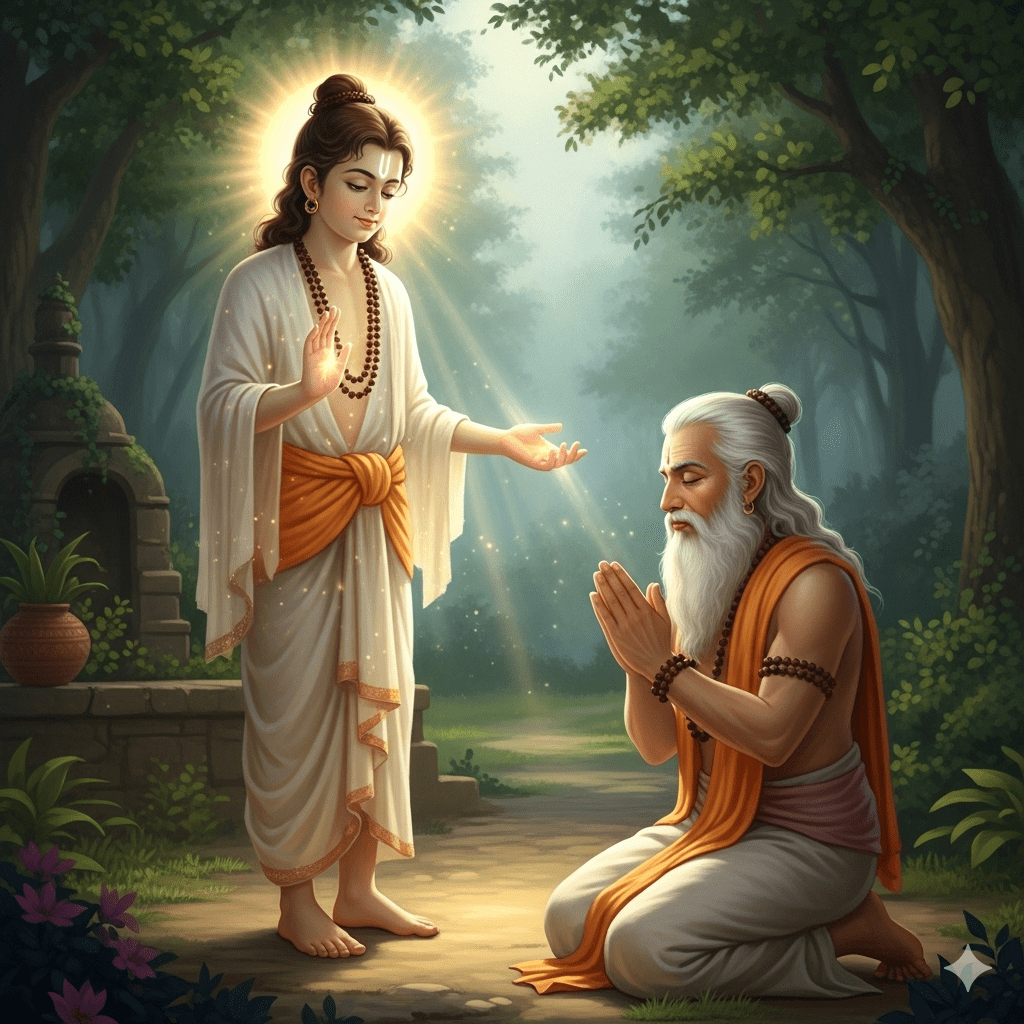
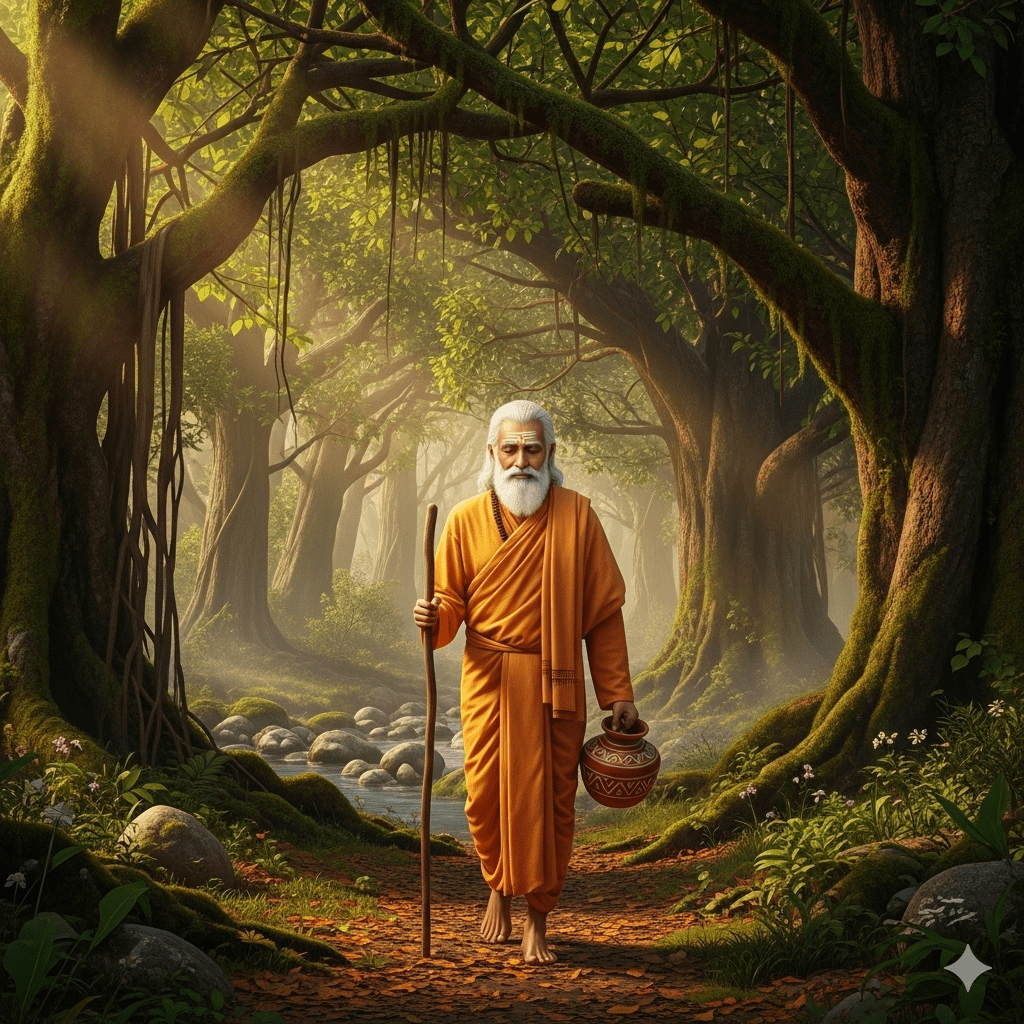
41-43.) Maitreya resumed: Thus addressed by the celebrated Kapila, Kardama (a Prajāpati) circumambulated Him in reverence and joyfully withdrew to the forest. Observing the vow of ahiṁsā (non-violence), depending solely on Śrī Hari, he renounced both sacrificial fire and permanent dwelling, and roamed the world free of attachment. He fixed his mind on Brahman, the Infinite—beyond cause and effect—who, though free from the three guṇas of prakṛti, yet illumines them, and who is realized through exclusive devotion.
44-45.) Free from ego and possessiveness, indifferent to the pairs of opposites (heat and cold, pleasure and pain, joy and sorrow), and viewing all equally, Kardama saw his own Self everywhere. His mind, turned inward and tranquil, was like an ocean without waves. With his mind absorbed in Vāsudeva, the indwelling Paramātman of all beings, through supreme devotion, he became free from the bondage of ignorance.
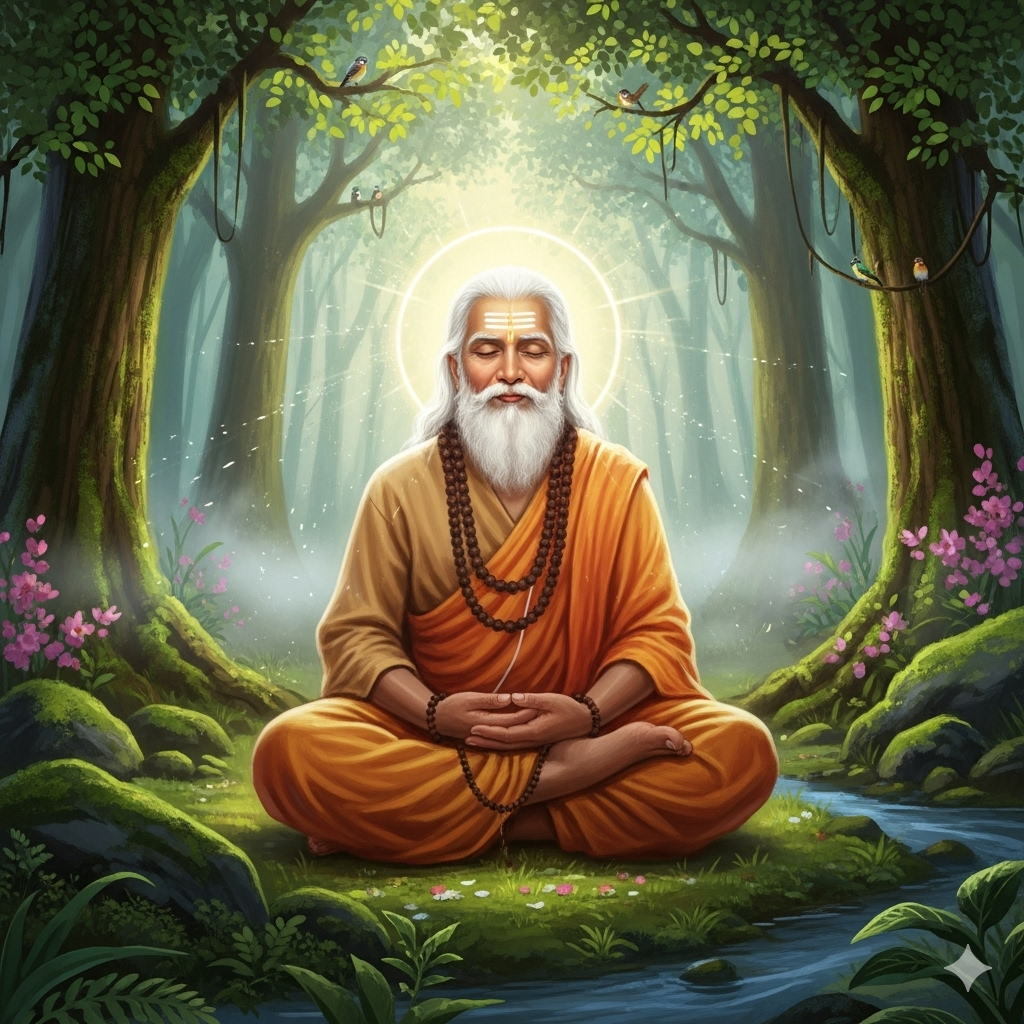
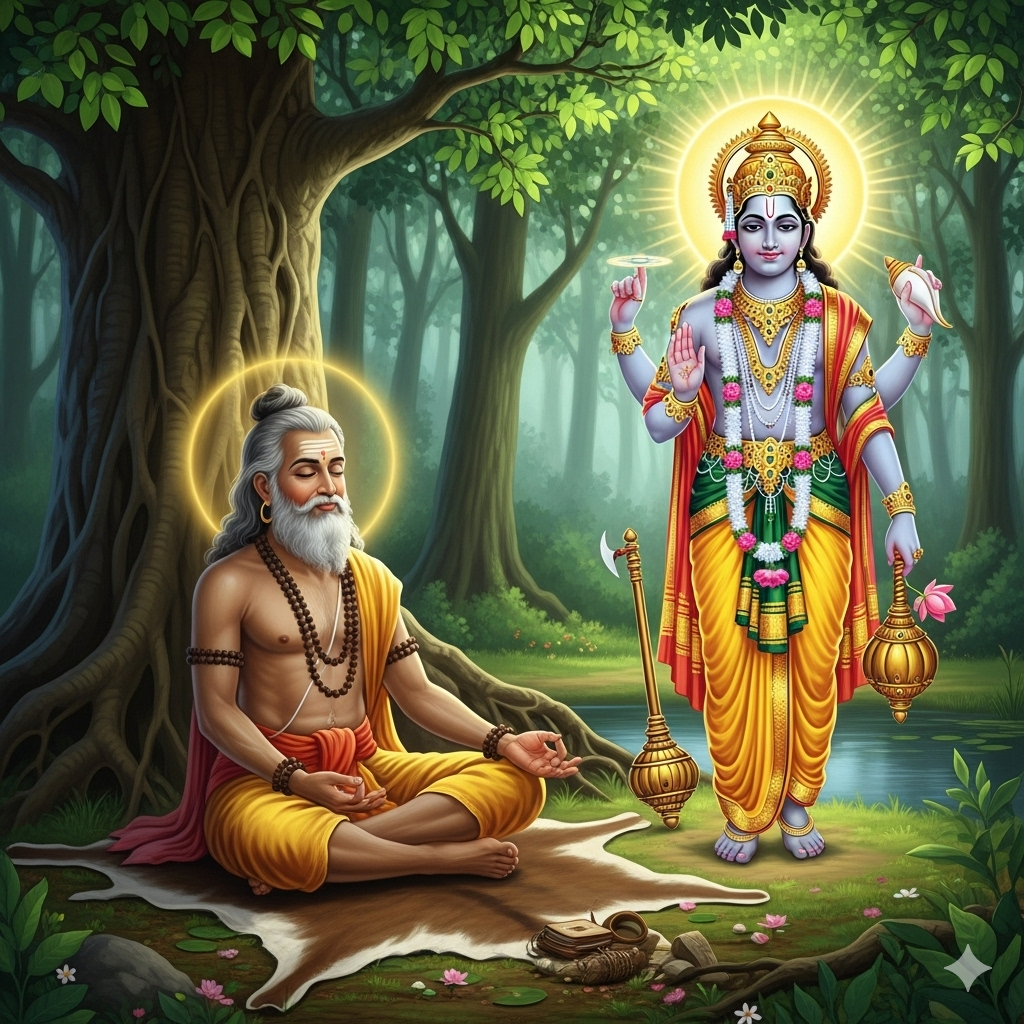
46-47.) He perceived the Lord—his own Self—residing in all beings, and all beings residing in the Lord—his own Self. Thus, Kardama, free of desire and malice, even-minded towards all, and endowed with devotion to Bhagavān, attained perfect union with Him.
Thus ends the twenty-fourth discourse entitled “Kapila’s Incarnation”, in Book Three of the great and glorious Bhāgavata Purāṇa, otherwise known as the Paramahaṁsa-Saṁhitā (the book of the God-realized Souls).
